
Summarize:
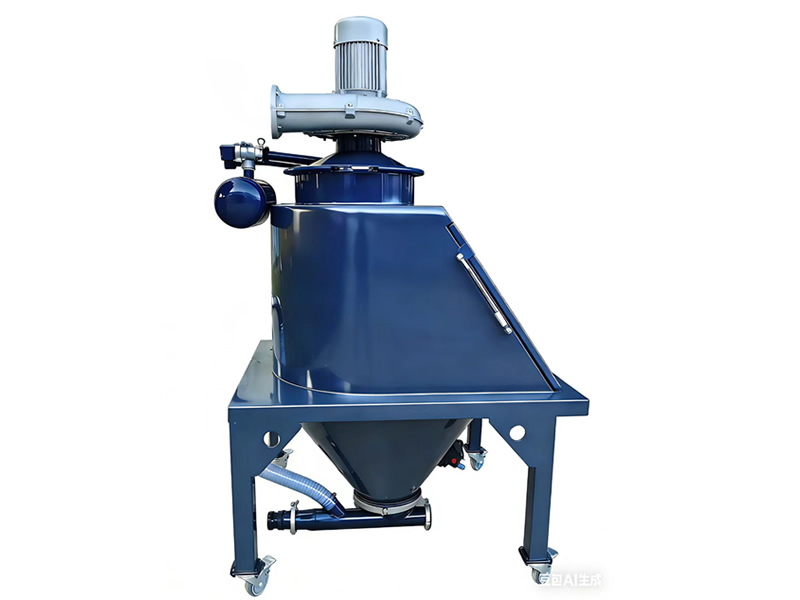
The dust-free feeding station is an environmental protection device designed for the feeding process of powder and granular materials by adopting negative pressure dust collection and filtration technology. It mainly solves the problem of dust pollution and realizes efficient, precise and clean material feeding.
Operating principle:
A stable negative pressure is generated by the fan to directionally draw the dust raised during material feeding into the filtration system. After the dust is retained by the filter element, it is cleaned by the pulse reverse blowing device. The material is recovered to the silo or screening device, and the clean air is discharged up to standard. There is no dust overflow and no material waste throughout the process.
Structural composition:
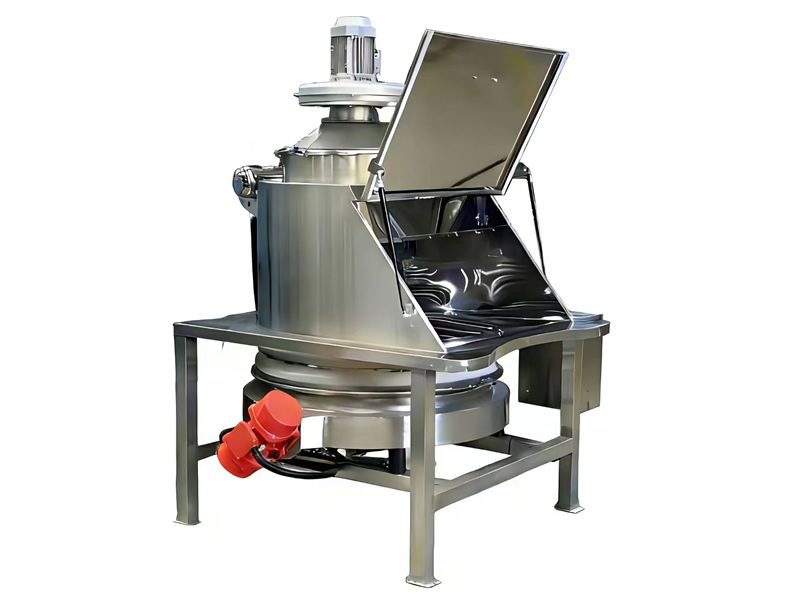
Components: Feeding platform (including sealed flip cover/soft curtain), filtration device (filter element/cloth bag, accuracy up to 0.55-10μm), negative pressure fan, control system, screening device/silo;
Auxiliary configuration: Vibration device (to prevent material caking), anti-static/explosion-proof components (suitable for flammable and explosive dust), food-grade/stainless steel material (meeting hygiene and corrosion resistance requirements).
Characteristic
Dust-free and environmentally friendly: High dust interception efficiency, in compliance with industry standards such as GMP and FDA, protecting the health of operators and the workshop environment.
Material recovery: The reverse blow cleaning design enables the recycling and reuse of dust, reducing material loss.
Strong adaptability: There are two types, namely the material separation bin type and the integrated feeding and screening type. They can be connected to downstream equipment such as vacuum feeders and mixers, and support feeding for small bags/ton bags.
Easy to operate and maintain: Simple structure, filter element can be disassembled, washed and replaced. The operating noise of the equipment is ≤75dB, and there are no dead corners for cleaning.
Main application industries:
It is widely applicable to industries such as pharmaceuticals, food (flour, milk powder), chemicals, new energy (lithium battery materials), electronics, cosmetics, and feed, especially suitable for production scenarios with high requirements for cleanliness and material purity.

