
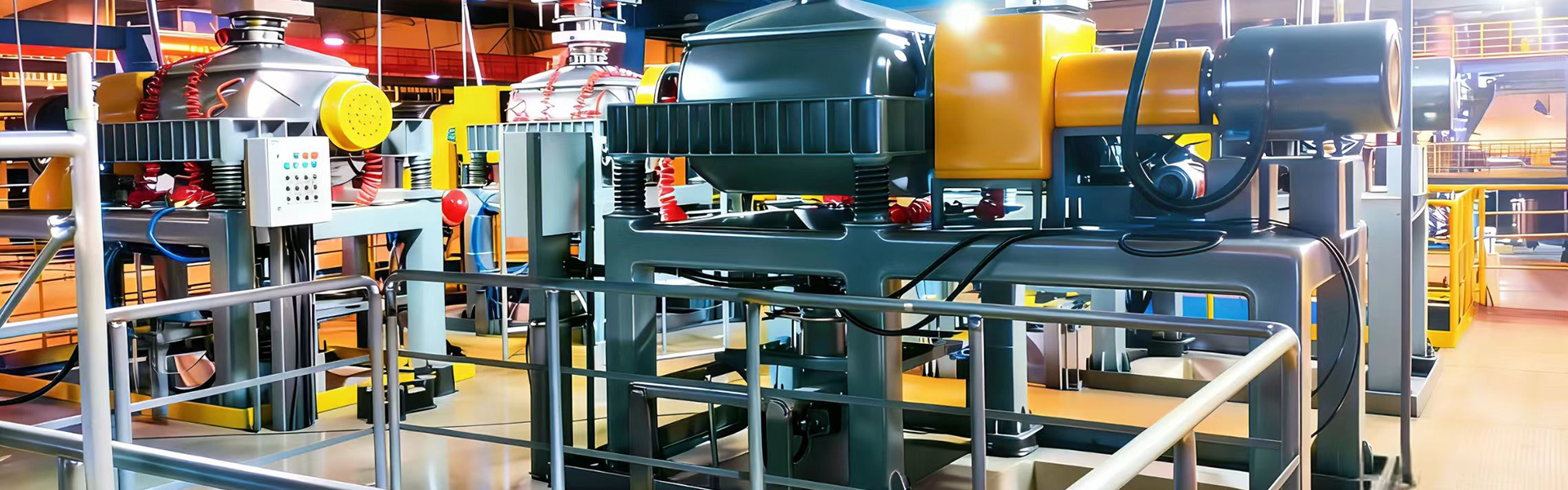
Because convective mixing is the function of moving materials in clumps from one part of the pile to another, it can quickly achieve rough, clumpy mixing. And on this basis, there can be more surfaces for fine, intergranular mixing. Therefore, the mixing speed of a mixer mainly based on convection must be relatively fast. For instance, the horizontal helical ribbon mixer is a case in point. Moreover, the physical and mechanical properties of each component have a smaller impact on the mixing effect than those of models mainly based on diffusion.
Diffusion-oriented models, such as drum mixers, etc. The mixing process is relatively slow, requiring a longer mixing time. The differences in the physical properties of the materials (such as particle size, particle shape, specific gravity and surface roughness, etc.) have a significant impact on the mixing effect. However, the mixing between particles can be carried out relatively finely.
The structure and manufacturing quality of the mixer have a significant impact on the mixing quality. If the width and outer corners of the inner and outer rings of the horizontal mixer are unreasonable, the materials will accumulate at one end, affecting the mixing time and uniformity. The structure is unreasonable, which may cause dead corners for materials. The welding quality of the support rods, ring belts, shafts, etc. is poor, resulting in unevenness and easy material adhesion, etc.
The dispersion grade of carbon black is evaluated by comparing the observed cut conditions of the samples with a set of standard photos, and the results are expressed in numerical terms. This is a method recommended by ASTM,American Society for Testing and Material. The specific approach is as follows: Tear or cut the mixed sample (some may require appropriate treatment) to expose its fresh surface. Observe it with the naked eye, preferably under a magnifying glass or a low-power binocular microscope. Compare the dispersion of carbon black with a set of five standard photos, and then evaluate its grade. So this method is also called the contrastive sample method. The visual dispersion level is related to some important physical elements of the mixture.
The specific approach is as follows: Cut the mixture into thin enough slices, process them to a certain extent, and then place them under transmitted light. Observe the carbon black clusters within through an optical microscope. The magnification of an optical microscope is between 75 and 100 times. The eyepiece used for counting contains a 1cm ² grid divided into 10,000 small squares. Calculate the area occupied by all carbon black clusters no less than 5μm. Based on the known content of carbon black in the material, the percentage of carbon black clusters with a size of 5μm can be calculated, expressed as the "percentage of carbon black dispersion". Optical microscopy and electron microscopy are commonly used qualitative methods for directly observing the morphology and structure of mixtures. There are many other methods to directly determine the mixed state, such as the photoelectric method. The principle is as follows: A 40um sample thin sheet made of a mixture of LDPE and carbon black is processed and scanned under a microphotometer. Due to the uneven size and distribution of the carbon black microclusters, the intensity of the light transmitted through them also varies.

