
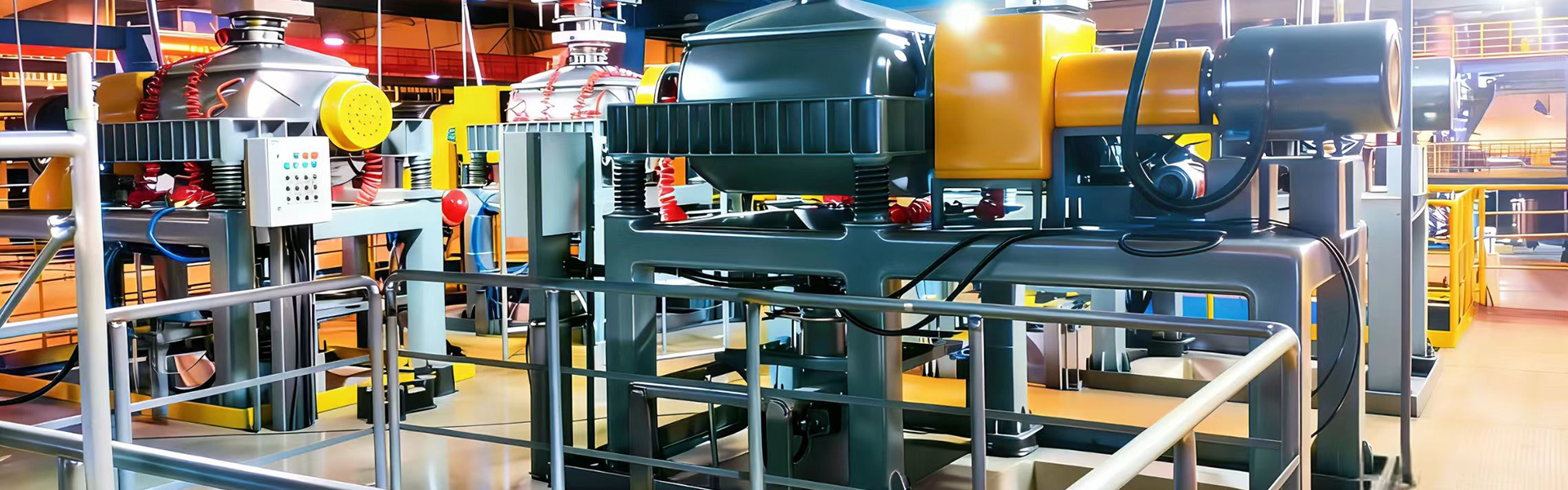
The horizontal mixer is composed of a U-shaped container, helical ribbon stirring blades and transmission components. The U-shaped long cylinder structure of the horizontal mixer ensures that the materials to be mixed (powder, semi-fluid) move with low resistance inside the cylinder. The forward and reverse rotating screws of the horizontal mixer are installed on the same horizontal shaft, forming a low-power and high-efficiency mixing environment. The helical blades of the horizontal mixer are generally made into double or triple layers. The outer spiral gathers the materials from both sides to the center, while the inner spiral conveys the materials from the center to both sides. This can create more vortices during the flow of the materials, thereby accelerating the mixing speed of the horizontal mixer. Improve the uniformity of mixing; The cycloidal reducer is driven by a pulley. Compared with the large torque of the gear reducer, the elastic connection of the belt drive has the advantage of protecting the transmission components when overloaded.
The discharge method of the horizontal mixer: The powder materials adopt a pneumatic large door structure form, which has the advantages of fast discharge and no residue. For high-fineness materials or semi-fluid materials, manual butterfly valves or pneumatic butterfly valves are adopted. Manual butterfly valves are economical and practical, while pneumatic butterfly valves have good sealing performance for semi-fluids, but their cost is higher than that of manual butterfly valves. In situations where heating or cooling is required, a jacket can be configured. There are two heating methods available for horizontal mixers: electric heating and heat transfer oil heating. Electric heating is convenient, but it has a slow heating rate and high energy consumption. Heat transfer oil heating requires the configuration of an oil pan, oil guiding power and pipelines, which involves a relatively large investment. However, it features a fast heating speed and low energy consumption. The cooling process can directly inject cooling water into the jacket. The jacket has a large heat exchange area and a fast cooling speed. The motor is directly connected to the stirring main shaft through a cycloidal pinwheel reducer, featuring a simple structure, high operational reliability and convenient maintenance.
Horizontal mixers are applied in the mixing of solid-solid (i.e., powder and powder) and solid-slurry (i.e., powder and slurry) in the fields of pesticides, veterinary drugs, food, chemicals, biology, animal husbandry, ceramics, refractory materials, plastics, compound fertilizers, etc. They are particularly suitable for the mixing of viscous materials.

